01 / The early years
A young seeker
of knowledge.
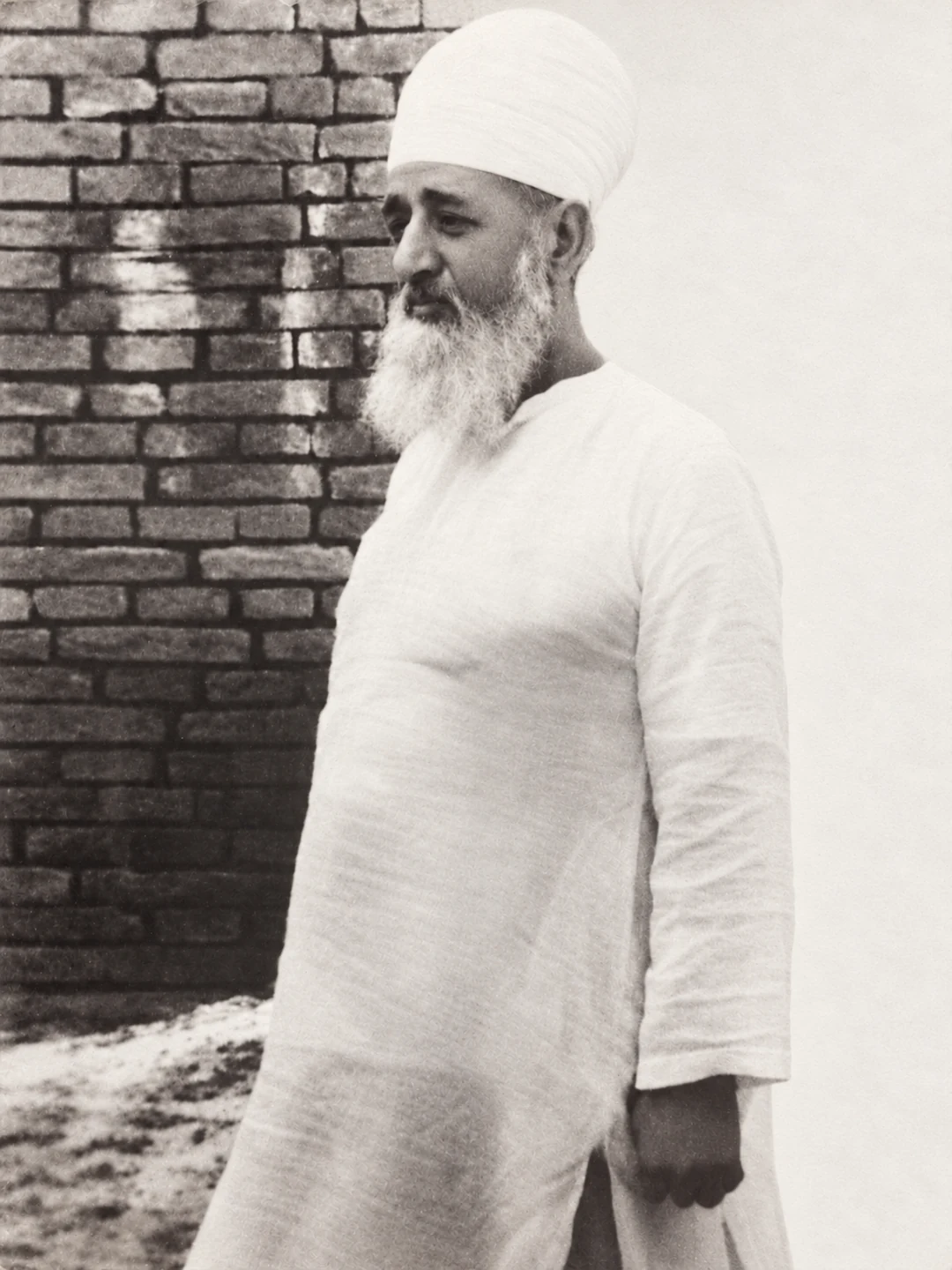
Long before Anwarabad became a village, its founder’s story began with a desire to learn.
Oral recollection places the birth of Khwaja Fazal Karim Sahib (RA) in the 1890s and connects his early childhood with Chakwal. Much about those first years is still to be recovered, but one memory has endured: his deep interest in religion began when he was very young.
His desire to learn about Islam was inspired by reading the stories of the Sahaba, the companions of the Prophet Muhammad. According to a recollection of his memoirs, those accounts encouraged him to devote more time to learning his deen, or faith, and to seek the company of people who could teach him. The memoirs are currently unlocated, and this part of his story is preserved through oral recollection.
By around the age of ten or twelve, he was seeking out madrasas and respected religious teachers. His search took him to places in India, drawn by the wish to sit with learned people and deepen his understanding of his faith.

02 / The journey
The long road
to a teacher.
One account tells of him leaving home at about twelve to seek a religious teacher in Punjab, in what is now Pakistan. This was before Partition, when the journey lay within undivided India.
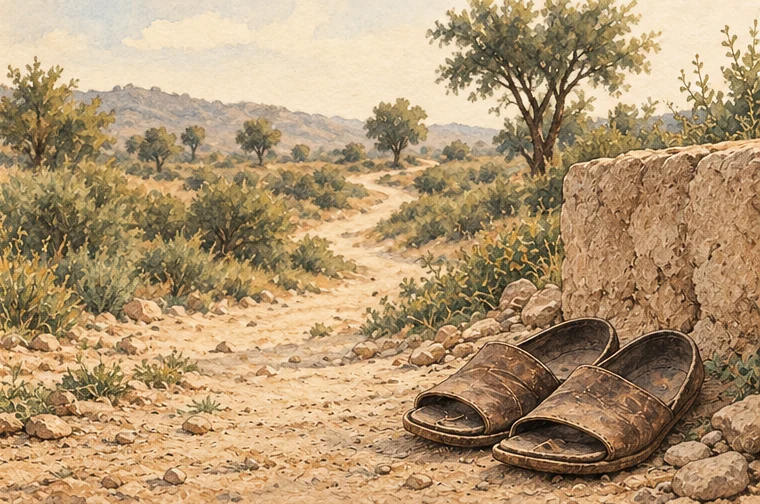
Many of the teachers he sought lived in small villages and remote places, away from the distractions of the cities. Reaching them could mean travelling for days across wooded country and barren, inhospitable land, with few people and little food along the way.
Although he came from a prosperous family, he accepted considerable hardship in his search for knowledge. The recollections describe him eating leaves from trees when there was nothing else to eat. Water could be hot from the weather and leave him sick. His sandals sometimes broke far from anywhere he could replace them, leaving his feet blackened beneath.
He travelled alone, crossing rivers and making parts of the journey on foot. At one isolated farm or residence, he asked for directions. The people there offered him food and promised to set him on the right path the following morning.
When he finally reached the teacher, the sight of such a young boy arriving after so difficult a journey made a lasting impression. The teacher drew others’ attention to his worn feet and the determination that had brought him there.
Life at the madrasas could also be demanding, with basic shared accommodation among the students. He later spoke about some of these experiences with humour. Alongside his devotion, he is remembered as a particularly clean and organised person.
03 / A place of reflection
The hillside before
Anwarabad.
Later in his life, Khwaja Fazal Karim Sahib (RA) sought quiet away from the busy surroundings where his family lived. He would go to the hills, to a place remembered as wooded, secluded and home to wild animals. It was the place that would become Anwarabad.
There he could spend time in prayer and the remembrance of Allah without interruption. According to these recollections, he sometimes stayed through the night.
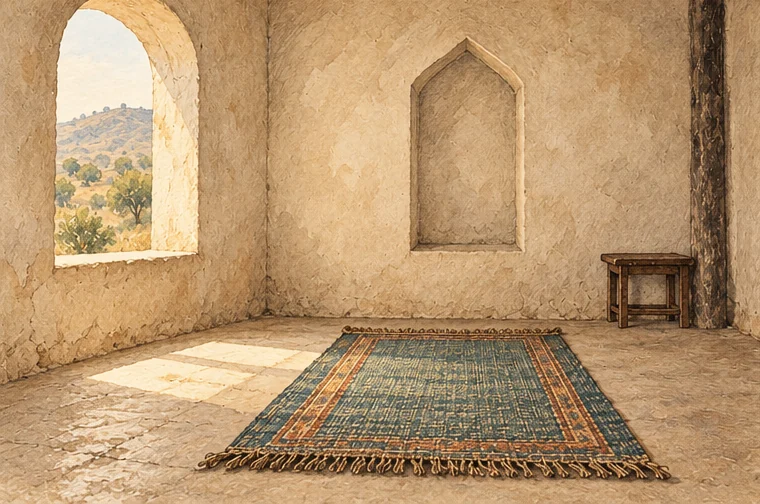
His disciples eventually made a room for him, digging into the hillside to create a place for his retreat. In these recollections, this small shelter is an early chapter in the story of the village he founded.
04 / A community’s trust
Faith, honesty
and understanding.
He is remembered as a man loved for his honesty as well as his religious devotion. He helped people understand one another and earned trust across the communities around him. These recollections describe the particular confidence placed in him by Hindus and Sikhs in the years before Partition.
That trust extended to decisions affecting the wider community. One account recalls members of Sikh communities seeking his advice about whom they should choose as a leader. His judgement was valued beyond his own religious community.
Another memory concerns the gold that women brought to him to be weighed and sometimes kept safe. He had special weighing scales for gold and a strong steel safe. These objects are remembered directly, while the accounts of Hindu and Sikh women entrusting their jewellery to him belong to the years before Partition. The stories preserve a picture of someone whose honesty inspired confidence in everyday matters as well as spiritual ones.
He is also remembered for his intelligence, orderliness and care in the way he lived. His standing in the community rested on both his learning and the integrity with which he treated people.

05 / A gift of land
The land for
the mosque.
The recollections tell of a woman from the landowning Chaudhary family whose land included the place where he would sit in prayer and remembrance. Riding through her land on horseback, she came upon him among the hills and trees.
She knew him and asked why he remained there in the sun and rain. In the account, he expressed a wish to build a mosque. She then invited him to take a stick and follow her horse across the land she was offering.
The story is remembered as a gift: the land for the mosque was donated by this woman. Her generosity forms an important part of the account of Anwarabad’s beginnings, alongside his devotion and the support of his disciples.
06 / The mosque
A place of worship,
a lasting legacy.
The account recalls a plaque on the mosque bearing the year 1945, with construction understood to have begun before then. The exact building timeline remains to be confirmed; the date is preserved here as part of the oral recollection.
From a secluded hillside retreat to a mosque and the community around it, these memories trace the beginnings of Anwarabad. They bring together a lifelong search for knowledge, the trust of neighbours across religious communities, and a gift of land that helped make a place of worship possible.